The Role of Online Influence in Employee Advocacy Programs

Recently I had the chance to discuss online influence and what 3M’s has done to power employee advocacy experts to engage in the digital world. Greg Gerik who led 3M’s eTransformation team globally since its inception, shares some ideas on how employee advocates are encouraged to build their online influence, benefiting the company and it’s customers.
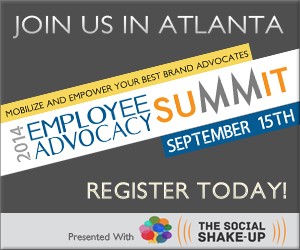
Employee-Advocacy-Summit

To learn more about Employee Advocacy and what’s really involved with creating a successful program, join us in Atlanta on September 15, 2014 for the Employee Advocacy Summit.

Below is the interview and full transcript captured at SXSWInteractive 2014 with Greg Gerik.

Susan: Hi I’m Susan Emerick, I’m here with Greg Gerik of 3M, where he leads the eTransformation team and drives innovation from Social Media to all things Digital. He’s also been a gracious contributor to our book The Most Powerful Brand on Earth. Welcome Greg!

Greg: Thank you.

Susan: I thought we would talk a little bit about influence. When it comes to social media and empowering employees at a company. You reference in book how important it is that every individual employee understands their own personal influence, I’d like to know how your program helps them grow that over time?

Greg: I think that one of the things 3M brings to the table is a very knowledgeable expert trusted advisor to our customers. It’s interesting to me the humbleness of the Midwest I think for our company lends itself to people just assuming they don’t have a very large sphere of influence. But sometimes employees need help to see how they can translate their offline influence to a digital world, getting them to the point where they understand that they can have a larger impact on our business, on their personal brand, on 3M as a whole and even on businesses that are not directly related to them, so it’s exciting when they see that. To be able to show that to them is the joy that I get out of that I get out of the work I do.

Susan: How do you incentivize and help employees build their online influence? What measurements do you use to incentivize them to keep going?

Greg: We take each on a case by case basis. We’re working with one division right now that has very aggressive sales goals and their rolling out some amazing new products in the architectural market and to help enable their team get to where they want to go we show them how they can leverage the content they’ve created, leverage the information they have about those products, and use that to make a deeper, richer connection with the customer – which they’ve always had, but now they can have in the digital world as well. It’s very rewarding and a good example of how we can do that. Setting measurements, of course you know is a passion of mine. We work with all of the teams to help them understand how they can measure progress against their objectives. They all have lots of objectives, but it’s about helping them measuring back to that object, not just awareness but what kind of awareness, not just impressions but what are they actually going to do for you or for the brand, the business, are you changing the hearts and minds of the customer? Are you there for them? That’s what matters.

Susan: Alignment to business goals is really, really important and unless that the foundation of how you’re enabling employee advocates you’re not going to be able to quantify any outcomes that are aligned to achieving those business goals. How do you address assumptions about digital? As you reference in the book, there’s a need to help people overcome dealing with their own expectations when they come to the table and really want to get involved. Could you tell me a little bit more about these assumptions and how you redirect?

Greg: People that are not expert level in digital as a whole sometimes come to the table with false assumptions about the industry, or false assumptions about who their customer is or where their customer is. In fact here at SXSW, I just had a great conversation with some people in the medical world that previously assumed that nobody was talking about digital and the Doctors and advanced practitioners aren’t the ones active in social it’s more the residents – but that’s not true. The data shows that Doctors at all levels are participating in conversations all over the place. Sometime publicly, sometime behind walled forums. When I think of my role, or the role of the Global eTransformation team as a whole, because I’m a small part of that team – when we work with our business groups, we encourage them not to think about the limitations but to think about the opportunities. There’ve been instances of communities or “walled gardens” of people having conversations that you can tap into because you can ask them for access, you can ask to be a part of the conversation, you can develop relationships within those forums and figure out a way to not offend the community they’re building but leverage it to support them and help them. Sometimes you’d be amazed at what simply asking a question can do. So being able to open up the opportunities to show the possibilities is a huge part of getting rid of the assumptions. People get very excited, business teams see oh wow we can do this – that’s out there, it’s amazing and then they want to do more and more. That’s really a blessing in my role.

Susan: So the future is very promising, things are definitely changing with data driven marketing. A whole new way that marketing and communications professionals have to be change agents. Think about enabling employees and what you can drive in terms of performance-based marketing. Thank you so much Greg for being here and for your contributions to the book.

Greg: Great book! Go out and buy this book!

Susan: Well, thanks, Greg. So nice to see you!

Tips to starting a successful Employee Advocacy program

Screen Shot 2014-09-03 at 1.20.05 PMAs author Emily Giffin once said, “Everyone wants to belong, or be a part of something bigger than themselves, but it’s important to follow your heart and be true to yourself in the process.” This quote perfectly sums up what employee advocacy is all about: empowering employees to promote their company’s message on social media and, in the process, allowing them to develop their personal brand, and position themselves as trusted advisors and thought leaders in their own networks. I couldn’t agree more! Today, I had the pleasure of sharing my experience leading successful employee advocacy programs and what it takes to empower employees to engage. Getting started may seem daunting. But remember the saying “Rome wasn’t built in a day” … this applies directly to building an employee advocacy program. It takes time, but you have to start somewhere! So here are a few tips I shared on the webinar. I hope they help you to get underway. If you need help, let me know, I’m just a tweet away @sfemerick Tips for getting started: Building the business case: Understand & Articulate Why You are Starting a Program To establish an employee advocacy program, you will probably need to build a business case to explain the value the program will create. Getting executive support is as much about educating the executives as it is about building the business case. They are not necessarily specialists in marketing strategy, or how to pull together a marketing program, or social networking. They will not have the time to stay abreast of the changes and emerging technologies that are occurring and how they’ve impacted the way people communicate. They may not fully appreciate how marketing, sales, and service must adapt to these changes to improve the customer experience. You have to be the expert who helps them understand the way people connect and communicate is changing the landscape of the way decisions are made and who decision makers trust. I shared some important research that can help you educate your executives, including the Edleman Trust Barometer, the Nielson Consumer Trust in Advertising study are good sources that illustrate employees and “people like me” are the most trusted sources of information online. Set Goals and Objectives: Align to business goals and priorities, for example:

  • New markets
  • Market growth
  • Customer Acquisition
  • Retention and Loyalty
  • Financial Growth or Cost savings

Make sure program goals and content align with corporate branding initiative Find a Champion. Better yet, be one! Build a pilot with early adopters. Here are some common characteristics of best suited candidates:

  • Expertise aligned to business priorities, they can be Technical or Business topical experts
  • Comfortable collaborating, commenting, publishing in social environments
  • Comfortable with and finds value in creating relationships digitally
  • Committed to sustaining activity and evolving participation to achieve personal and business objectives
  • Willing to leverage internal listening capabilities to identify existing social graph and enhance online professional network

I hope these tips are helpful to you! If you can, join us in Atlanta for the Employee Advocacy Summit. We have a great line up of speakers representing various industries, ready to show you the ropes based on their first hand experience! Employee-Advocacy-Summit                 In case you missed the buzz on Twitter today, here’s the full Storify ….

10 Benefits of Social Business Collaboration

Is collaboration critical to your team’s success? Do you work in a globally matrixed environment? How do you foster the kind of open communication on your team that encourages information sharing, learning, partnering on projects, breakthrough thinking?

There are so many benefits to open collaboration in a social business. If your leadership is struggling to understand the benefits, the below short list provides 10 starting thoughts for you to help educate them.

Screen Shot 2015-04-25 at 11.52.52 PM“In a social enterprise, your value is established not by how much knowledge you amass, but by how much knowledge you impart on others” ~ Ginni Rometty, CEO IBM


10 Benefits of Social Business Collaboration

  1. Share your opinion
  2. Seek input from others on their point of view, provide your own point of view by commenting on their posts
  3. Find and share information by tagging content with keywords. This helps you find relevant information by keyword across various content types, such as: Blogs, Communities, Bookmarks, Files, Wikis, Forums. You’ll be able to find information that is posted publicly, or inside a private community that you’re a member of.
  4. Brainstorm with your team
  5. Share an experience or best practice
  6. Share photos or videos
  7. Get project updates in real time
  8. Collaboratively manage a project
  9. Share important and useful links
  10. Share, edit or get feedback on a document with your team

Employee Advocacy Summit Launches in Atlanta September 2014

As Employee Advocacy grows into a new mega-trend for brands, business leaders across industries want to know how it will create value and how to best execute within their brand, while ensuring ROI and compliance. To help today’s marketers navigate the complexity of building, scaling and driving performance through Employee Advocacy programs, Chris Boudreaux and Susan Emerick created the 2014 Employee Advocacy Summit, in collaboration with Social Media Today.

Employee-Advocacy-Summit

Whether you’re just getting started, well on your way, or not sure how to begin, this half-day conference brings you straight talk from practitioners at leading brands, and pioneering industry leaders in the domain of Employee Advocacy.

The 2014 Employee Advocacy Summit on September 15, 2014 in Atlanta will open this year’s Social Shake Up conference, which runs September 16 – 17.

Bring your team and find out what’s really involved in a successful Employee Advocacy program. From strategy and planning, legal and compliance, education and training to contending with the plethora of technologies, performance measurement and how to quantify ROI.

An added plus: the conference will begin with a panel of Employee Advocates who have participated in such programs. They’ll give you the answers to the most commonly asked question: “What’s in it for me?” by sharing their views on the many benefits they’ve reaped by participating in an Employee Advocacy program on behalf of their company.

Regardless of your organization’s size, you will take away proven approaches to mobilize and empower employees to advocate for your brand. Reserve your spot today!

And feel free to contact Susan Emerick or Chris Boudreaux for more information about the event, or Employee Advocacy programs:

Susan Emerick:   susanemerick.com  @sfemerick

Chris Boudreaux:  socialmediagovernance.com @cboudreaux

We spoke with Social Media Today CEO Robin Carey about the Employee Advocacy Summit when we were in Austin for SXSW this year:


Don’t miss the opportunity to join us! You can register here:  2014 Employee Advocacy Summit

A social business drives employee engagement across the social web

Social media has changed the way people connect, interact and form relationships. We now have the ability to easily share our opinions and engage in dialogue with knowledgeable network connections, anytime of day, anywhere in the world. In a social business, value in social media is dependent upon the people who share and tell your company story.

Screen Shot 2015-04-25 at 11.52.52 PM“In a social enterprise,” says GinniRometty, CEO of IBM … “your value is established not by how much knowledge you amass, but by how much knowledge you impart on others.”


Employee engagement in online activities and conversations with thought leaders will allow you to impart valuable knowledge to the global community and contribute to the business goals.

Competitive advantage, in this exciting new world, is afforded to the organizations that not only make use of social tools and networks but also equips employees to share their knowledge and authentic voices. Engaged employees building relationships with others, helping them by sharing their knowledge and expertise on industry trends, emerging technology, or even economic trends through social networking, are key attributes of a truly social business.

A conduit between internal and external influencers, employees can take an active role in shaping how the public interacts with a company, brand properties and communities across the social web. The use of key social marketing strategies to activate employee experts and initiate conversations around key imperatives will separate leaders from the pack.

What are you doing to equip your employees to take part, share knowledge and offer their authentic voice?

This isn’t Margaritaville. You can lose the parrot head, my friend.

What’s the most common Employee Advocacy mistake brands make? Many brands have given their employees permission to use social media, published a social media policy, and offered training on the use of social venues. But that level of support leaves a lot of potential value on the table.

Many brands avoid empowering their employees in social media because they do not want to dis-intermediate the marketing team from customers, or they do not want employees creating brand assets that the brand does not own. Some brands fear that employees in social media could damage brand reputation or violate regulations and create liability for the brand. Some brands just do not know how to begin.

Regardless of how a brand feels about its employees in social media, nearly every brand today has employees who are active in social media and employees who talk about their brand in social media. Those employees engage in social media for a wide range of reasons. In many cases, employees get into social media because their partners and customers demand it.

While almost every brand today can find employees using social media to discuss their products, services, working conditions, and so on, the brands that achieve the most value deploy corporate resources and guidance to empower their employees in social media.

Parrot HeadSimply asking employees to parrot brand-generated messages through their personal social media may help the brand to gain small amounts of reach or engagement, but it is not a sustainable strategy for engaging audiences and developing relationships online. It is easy to do, so a lot of brands do it; however, that approach fails to respect the relationships employees and their audiences, so it does nothing to help employees create a differentiated and effective presence online. Specifically, when people simply repeat brand-generated messages, they lose the ability to attract people like me, thereby diminishing their ability to build trust and advocacy online, or worse irritating their network and causing abandonment.

Here’s a hilarious example of the effect of parroting messaging featured by CONAN, to demonstrate the point:

See what I mean?

All joking aside, this kind of parroting can do huge damage to your brand. Not only is irritating your followers, it’s likely driving them away in droves.

A preliminary study that I’ve been working on, with my colleagues in IBM Research Watson Lab, has found that more than 50% of the 230,430 followers of a certain branded social account is also following more than one of the company’s branded or employees accounts. Given this, there is a risk of creating more spam than value for our constituents, if parroting messaging and distributing through multiple accounts continues. Resulting in the opposite of creating value.

My team has coined the phrase “Ecko Gecko” to describe the phenomenon. We’ve created guidance to help our employees understand what negative affects parroting messages has when they simply copy & paste the same message and share it across multiple accounts. There is significant risk in damaging brand reputation.

Leading brands monitor social media and use social media analytics to observe and evaluate the effectiveness of their employee’s who are engaged in social on behalf of their companies. It’s scary what you might find. Especially when it comes to the practice of copying & pasting the same message over and over then distributing via social accounts, both branded and employee accounts. Are you monitoring in this way?

There is an important opportunity here, a teaching moment. Don’t let it paralyze your efforts, use the insights to create new education and training to course correct. Share the findings from your analysis and provide clear, concrete incentives for behavior modification. If you share examples of what not to do, backed by quantifiable and substantiating evidence based on data which demonstrates the negative impact such actions have, such as:

  • driving “un-follows”
  • encouraging “opt-outs”
  • causing “removals from lists”, (just to name a few)

Who can argue or ignore that?

For more on how to “Help Your People Do Well”, read chapter 2 of The Most Powerful Brand on Earth.

A Retrospective: IBM’s Enterprise Social Strategy

On this day, you’ll see lots of “best/worst of” lists about Social Media and Social Business trends. I’m proud of the pioneering work my team at IBM has led not only in 2013, but for the last 10! That’s right, we’ve been pioneering our leadership position for many years and have made significant progress while learning from our mistakes to course correct. In the spirit of celebrating the close of 2013, this is a simplified visualization of IBM’s Enterprise Social Strategy & Programs milestones over the last 10 yrs. (2003-2013).

Categories of work include:
– Strategy
– Research & analysis
– Governance
– Activation
These categories of work are then mapped to 4 Maturity stages, depicted at the bottom, advancing from left to right:
Ad-hoc experimentation / discovery (2003-2009)
Sponsored exploration (2009-2010)
Business unit engagement (2011-2012)
Enterprise engagement (2012-2013)


I’m happy to say I’ve been a part of this journey each step of the way and was able to document the milestones & stages of maturity, acting as an archivist, along with a few of my colleagues especially: Ethan McCarty, George Faulkner, Josh Scribner, Bill Chamberlin & Amy Laine

Cheers to progress & innovation! Wishing all continued success as you strive to move your companies forward in 2014 and beyond.

2014 Digital Trends And Predictions From Marketing Thought Leaders

What will 2014 bring and what should organizations and individuals expect from the continued digital revolution? Forbes bloggerEKaterina Walter interviews 26 marketing leaders, who provide their thought-provoking expert opinions. I’m honored to have been included amongst such esteemed colleagues.

See full post: 2014 Digital Trends And Predictions From Marketing Thought Leaders

Embracing Brand Identity in the World of Social Media

Your employees are the stewards of your brand, empower them to share their expertise & knowledge in service of customers. This won’t just happen, cultural change & a system of engagement are necessary to make it a reality. Ethan McCarty shares what we’re doing at IBM to Embrace Brand Identity in the World of Social Media.

Alumna Leads IBM’s Internet and Social Business Marketing

I’m proud to be a Spartan! My college experience was unforgettable and propelled me to pursue my dreams of working in the Marketing & Communication profession. My Alma Mater Michigan State University, ran this nice feature to help promote my book The Most Powerful Brand on Earth: How to Transform Teams, Empower Employees, Integrate Partners and Mobilize Customers to Beat the Competition in Digital and Social Media. 

Read the full post: Alumna Leads IBM’s Internet and Social Business Marketing