Going #Rogue: Losing Control of Your Social Media

Social media plays an important role in global public relations strategies. As quickly as social media can build a global brand, it can tear one down at the hands of malicious insiders or hackers. Recently we have seen an increase in the proliferation of “rogue” social accounts across the social sphere. Attacks like these are not new. In 2013, hackers accessed both the Associated Press’ and FIFA World Cup’s Twitter accounts. A single tweet from the APTwitter handle resulted in a $136.5 billion drop in the S&P 500 index’s value in minutes. A year later Burger King’s Twitter account was made to look like McDonald’s while Jeep’s account was hacked noting that the company was sold to Cadillac.

Now, well known agencies like the Environmental Protection Agency (EPA), National Park Service (NPS) and National Aeronautics and Space Administration (NASA) have all fallen victim to “rouge” takeovers. Rand Research suggests that stolen Twitter accounts are now worth more than stolen credit cards. Rogue accounts attract followers by the thousands, which should be a warning signal for brands across the globe. Imagine losing control of your company’s online messaging or branding.

Crisis communication is evolving and becoming incredibly sophisticated. This session focuses on the variables involved in a new era of crisis planning and risk communication. Critical preparedness is important for the public and media when public perception becomes reality as a result of such a breach.

I was honored to present at PRSA 2017 International Conference in Boston, where I was joined by my esteemed academic collegues @GinaLuttrell  and @drjamiward
Screen Shot 2018-03-08 at 1.42.27 PM

In our session we shared: 

  • How companies can be proactive and vigilant when protecting their brand in an effort to mitigate ramifications from rogue sites. Discuss the ramifications associated with the public’s blind trust in anonymous communication.
  • The importance of investing in and equipping the workforce with training. How to train organizational leaders to react to a crisis including appropriate responses to the public and within social media. Plus, we examined the role that PR practitioners play in damage control should a “rogue” or “alt” channel become a reality for your organization.
  • Participants learned about the future of communication stemming from hackers or acts of civil disobedience.
  • We rounded out the session with outlining the difference between social media guidelines and policies, and how to begin building the framework for social media policies. Plus, writing social media policies and developing education and compliance training on cybersecurity will help to address vulnerabilities.

Are You Prepared?
Have You Prepared Your Employees?
Registered PRSA members can access our presentation here  If you’re interested in learning more about equipping your team, don’t hesitate to reach out to us!

Susan Emerick, Founder, Brands Rising

Regina Luttrell, Ph.D., Assistant Professor, Syracuse University, S.I. Newhouse School of Public Communications
Jamie Ward, Ph.D., Assistant Professor, Eastern Michigan University

Artificial Intelligence Implications for Marketing

I had the pleasure of presenting at the Direct Marketing Association of Detroit’s (DMAD) “Fast Forward” Spring conference. It was a great homecoming, as the DMAD was a critical association early on in my Direct Marketing aspect of my career. I was glad to be back and continuing the longstanding tradition of advancing the data driven direct marketing profession through education, community and sharing my expertise.

Marketers are applying insights gathered from AI to business and marketing strategies and may not even know it! This presentation provides you with the basics that you need to understand from natural language processing, machine learning and deep learning the 3 essential aspects of Artificial Intelligence. You’ll also benefit from several examples that describe how Artificial Intelligence is being applied to marketing:

  • Marketing Automation and Customer Relationship Management
  • Social Media Listening, Identifying Influencers and Communities and Prioritizing Top Influencers for engagement
  • Content curation and Product recommendations
  • Writing SEO optimized headlines
  • Speech recognition 
  • Ad Targeting
  • Chatbots
  • Dynamic pricing

Social Media Engagement forces HR to update job roles and skill requirements

The Human Resources department, in most organizations, is getting a dose of reality as they come to terms with employees having their own personal brand — forcing them to rethink job role definitions and skill requirements.

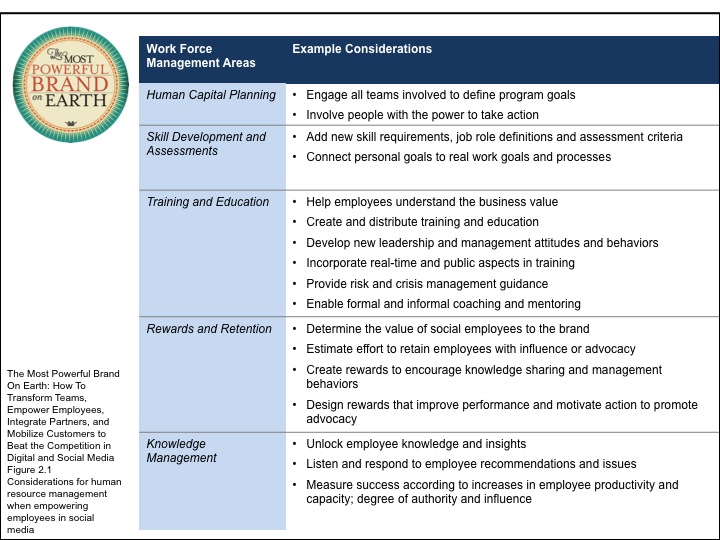
Long gone are the days that social media responsibility is limited to the social media team that administers branded channels or looks after social customer care. While these teams are still essential and have their critical role to play, employees are increasingly driving engagement with customers, partners and communities through social networking, requiring them to have the skills to engage in real-time conversations, online, and often in public view. But most are not professional communicators. So they will need new skills, and you will need to help them develop those skills while taking into account considerations based on various workforce management areas, as described in Figure 2.1. below
Figure 2.1

Scaling this kind of skills development program will require that you embed social media skills into the employee development and evaluation processes across the organization. Eventually, you will need to add social networking skills to your organizational skills taxonomy; in most organizations, this helps to define role standards throughout the organization.

Some employees’ job responsibilities will change, and the Human Resources organization will need to update job role definitions and skill requirements. These new skills will dictate employee performance evaluation criteria that may be new to the brand. You might find it helpful to define different skill levels at different career levels, and thereafter, skill development plans and assessments should change to support the new job role definitions, requirements, and career advancement.

During training and education, begin by helping your people to understand the business value that can be created when employees and partners build trust and advocacy online. To help them truly understand how the realtime and public aspects of social media engagement work, provide real-life examples that illustrate the types of behaviors you want them to demonstrate.

In particular, tell employees what they should do in social media, instead of what they should not do. Demonstrate this “what to do” approach across various roles in your organization, such as sales, marketing, and product specialists. Describe the benefits that the brand expects to achieve in terms of quantifiable business outcomes. Doing so will make the training more meaningful to employees.

Given the quickly evolving nature of social and digital media, you will need the ability to quickly create and distribute training or education to your people—especially as new channels, best practices, or policies emerge or fade.  This approach could easily be used to train employees who are active in social media and also to keep them continually equipped with the latest information about your brand.

Remembering Robin Carey, founder of Social Media Today

I had the good fortune to meet Robin several years ago when I began serving on the Social Media Today (SMT) Advisory Board to help her advance engagement with Social Business Leaders and extend the Social Shake Up event programing to feature such leaders. It’s hard to believe what she was able to accomplish in such a short number of years. Always on the vanguard of what’s new and emerging in the industry that was coming of age. Robin was not only brilliant; she was fun and incredibly interesting. She was sincerely interested in knowing you, as a colleague as well as a friend.

She loved her boys and was so proud of their accomplishments. She joyfully shared updates on their progress as any doting mother would. She was open about the reality of building a business while balancing the demands of being a Wife and Mother. She had a special knack for helping aspiring women. I was a beneficiary of her generosity, for which I’m forever grateful. She was the quintessential Master of Ceremonies, bringing business leaders together from all over the world to advance the Social Media industry through knowledge sharing and collaboration.

No one could host an event and make it fun like Robin. She would light up a room with her energy and elegance. She knew how to prepare the “run of show”, she owned the stage with her glamorous style. So many times she’d break into dancing to her favorite tunes in between event segments. She embraced good times and welcomed all to join in … and we did.  She made you feel special for being a part of what she was building. Always giving with her time and intellect, she was a connector from the heart.

Screen Shot 2015-12-21 at 7.01.42 PM
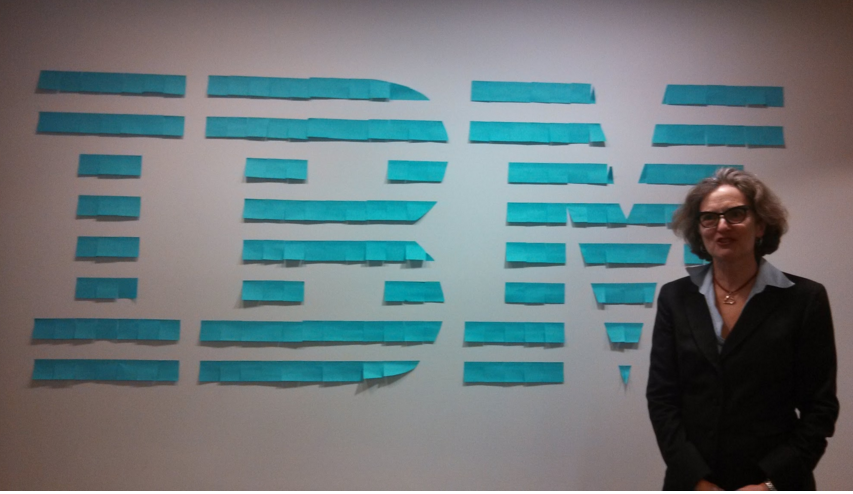
Robin Fray Carey visits IBM Design Lab in New York

She shared the stage with so many. Not just the event stage, the editorial stage. She wrote incredible pieces highlighting bleeding edge work from brand leaders who were in the trenches making it happen. She wrote this post featuring the work of my IBM team, showcasing how we were using Agile practices to transform marketing as well as featuring the foundational work of the IBM Select program that I championed.

Screen Shot 2015-12-21 at 10.34.46 PM
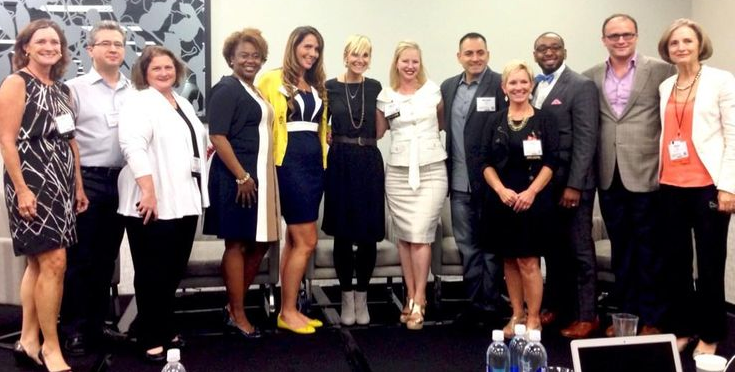
Employee Advocacy Summit 2014 Left to Right: Jeanne Murray, Constantin Basturea, Tammy Wagner, DeShelia Span, Denise Holt, Liz Bullock Brown, Sabrina Stoffregen, Michael Brito, Susan Emerick, Michael Ambassador Bruny, Chris Boudreaux and Robin Fray Carey

I’m especially grateful for all that she did for my co-author Chris Boudreaux and I. From hosting a book-signing event for our book launch in 2013 to allowing us to share the W Hotel venue to launch the Employee Advocacy Summit in 2014 as a half day pre-opener to the Social Shake Up.

The most moving post she wrote was this one about our book The Most Powerful Brand on Earth. While I was moved by the accolades she included and the hard hitting facts on the integrity of our content … that wasn’t what moved me most. It was the date that it was published and how I came upon reading it that really moved me. You see, Robin had a sixth sense. She knew that my mother was dying and I was her primary care giver. We talked a lot about our Mothers over the years and the kinds of role models they were to us and how we hoped our children would reflect on our legacy some day. So it was … the morning my Mom passed, as I was walking out of her room, a notification appeared on my phone of a new SMT post. When I opened it, this was the post she wrote. It was postmarked the same date my Mom left this world, January 27, 2014. I was overwhelmed with the feeling of Divine Intervention that my Mom was proud of me, while at the same time, so was Robin Fray Carey.

Thank you Robin and the SMT Family. We’ve created a movement, together.

A Retrospective: IBM’s Enterprise Social Strategy

On this day, you’ll see lots of “best/worst of” lists about Social Media and Social Business trends. I’m proud of the pioneering work my team at IBM has led not only in 2013, but for the last 10! That’s right, we’ve been pioneering our leadership position for many years and have made significant progress while learning from our mistakes to course correct. In the spirit of celebrating the close of 2013, this is a simplified visualization of IBM’s Enterprise Social Strategy & Programs milestones over the last 10 yrs. (2003-2013).

Categories of work include:
– Strategy
– Research & analysis
– Governance
– Activation
These categories of work are then mapped to 4 Maturity stages, depicted at the bottom, advancing from left to right:
Ad-hoc experimentation / discovery (2003-2009)
Sponsored exploration (2009-2010)
Business unit engagement (2011-2012)
Enterprise engagement (2012-2013)


I’m happy to say I’ve been a part of this journey each step of the way and was able to document the milestones & stages of maturity, acting as an archivist, along with a few of my colleagues especially: Ethan McCarty, George Faulkner, Josh Scribner, Bill Chamberlin & Amy Laine

Cheers to progress & innovation! Wishing all continued success as you strive to move your companies forward in 2014 and beyond.

2014 Digital Trends And Predictions From Marketing Thought Leaders

What will 2014 bring and what should organizations and individuals expect from the continued digital revolution? Forbes bloggerEKaterina Walter interviews 26 marketing leaders, who provide their thought-provoking expert opinions. I’m honored to have been included amongst such esteemed colleagues.

See full post: 2014 Digital Trends And Predictions From Marketing Thought Leaders

Embracing Brand Identity in the World of Social Media

Your employees are the stewards of your brand, empower them to share their expertise & knowledge in service of customers. This won’t just happen, cultural change & a system of engagement are necessary to make it a reality. Ethan McCarty shares what we’re doing at IBM to Embrace Brand Identity in the World of Social Media.

Customers Trust Expert Social Employees more than any other source

Employee Advocacy is getting a lot of hype lately. So what’s the secret to empowering social employees to be engaged in social media to benefit your brand? Here’s a short video from today’s 3M Think TANK, hosted by Greg Gerik where following Brian Solis, I present a few concepts from our new book The Most Powerful Brand on Earth: How to Transform Teams, Empower Employees, Integrate Partners, and Mobilize Customers to Beat the Competition in Digital and Social Media 

3M ThinkTANK, September 26, 2013 – Susan Emerick

For the full roadmap on how to mobilize expert employees to advocate for your brand, check out the book on Amazon

How many hours of social media training are enough for social employees?

There is no right answer to this question. The number of hours of social media training required depends entirely on the individual, for two reasons:

  1. Each person comes into social media training with a different level of understanding, skill and practical application of social capabilities.
  2. Each person is unique in the way they learn, some requiring more time than others.

So saying any given number of hours is sufficient is the really the wrong question. The notion of setting the clock and saying everyone should be able to get this in a set amount of time is pretty dangerous concept. Let’s play this out a little further …

Early adopters of social who’ve built a significant presence and social currency on their own prior to the training, may need very little training. While those starting from scratch and/or have many doubts about the value of social to begin with (these are the ones who come kicking and screaming into the training), may need much more, that is … if you convince them to being trained in the first place.

When building a training curriculum start by teaching:

  1. The value of building trust and credibility online and how it can be used to engage with colleagues, partners and customers to establish or nurture relationships.
  2. Help your employees understand the shift in the way people seek and consume information. And, how the most sought after sources are actually credible and trustworthy experts in their field. The 2012 Edelman Trust Barometer is a great study showing this trend.
  3. Explain the way humans communicate has changed dramatically as a result of social capabilities, our world becoming increasingly more social every minute and earned media sources remain most credible, the Nielsen Global Trust in Advertising Survey provide more details.
  4. Help them to understand how their personal engagement can benefit them professionally, as well as benefiting the company or the customers they serve.
  5. Be clear about the level of effort and commitment required to develop an effective online presence.

One size fits all training in a set amount of time with certification is a recipe for disaster. As cited by Gallup Leadership research:

When leadership fails to focus on individuals’ strengths, the odds of an employee being engaged are a dismal 1 in 11, or 9%. But, when . . . leadership focuses on the strengths of its employees, the odds soar to almost 3 in 4, or 73%. When leaders focus on and invest in their employees’ strengths, the odds of each person being engaged goes up eightfold.

I recommend a training program include an assessment of the employee from which they can plot the course that’s right for them. Consider approaching the assessment and personalized planning through the following steps:

  • Inventory each participant’s social presence to understand the social venues they use and how they use them.
  • Understand each person’s motivation for getting involved and remaining engaged in social media.
  • Assess the employee’s preferred online behaviors to determine the employee’s comfort level with various methods of engaging online. For example, do they only read what other people publish? Do they comment on other people’s content? Or do they create content on their own?
  • Determine the most effective ways to mobilize each employee according to their strengths and preferences. Also determine how you will empower them to utilize their skills, preferences, and strengths.

A social employee training curriculum needs to begin with an overview of the benefits of participating, clearly defining the expectations, time commitment, training support provided and the milestones, goals or desired outcomes your expecting them to drive. For example, our program focuses on 3 key themes Go Social. Stay Safe. Be Smart.

  1. Go Social: Collaborating via social computing to pioneer intellectual capital and drive innovation that matters for clients and the world
  2. Stay Safe: Practicing secure computing – building trust by taking personal responsibility to secure IBM, our clients and colleagues
  3. Be Smart: Building and sharing insight and expertise, and exercising good judgment

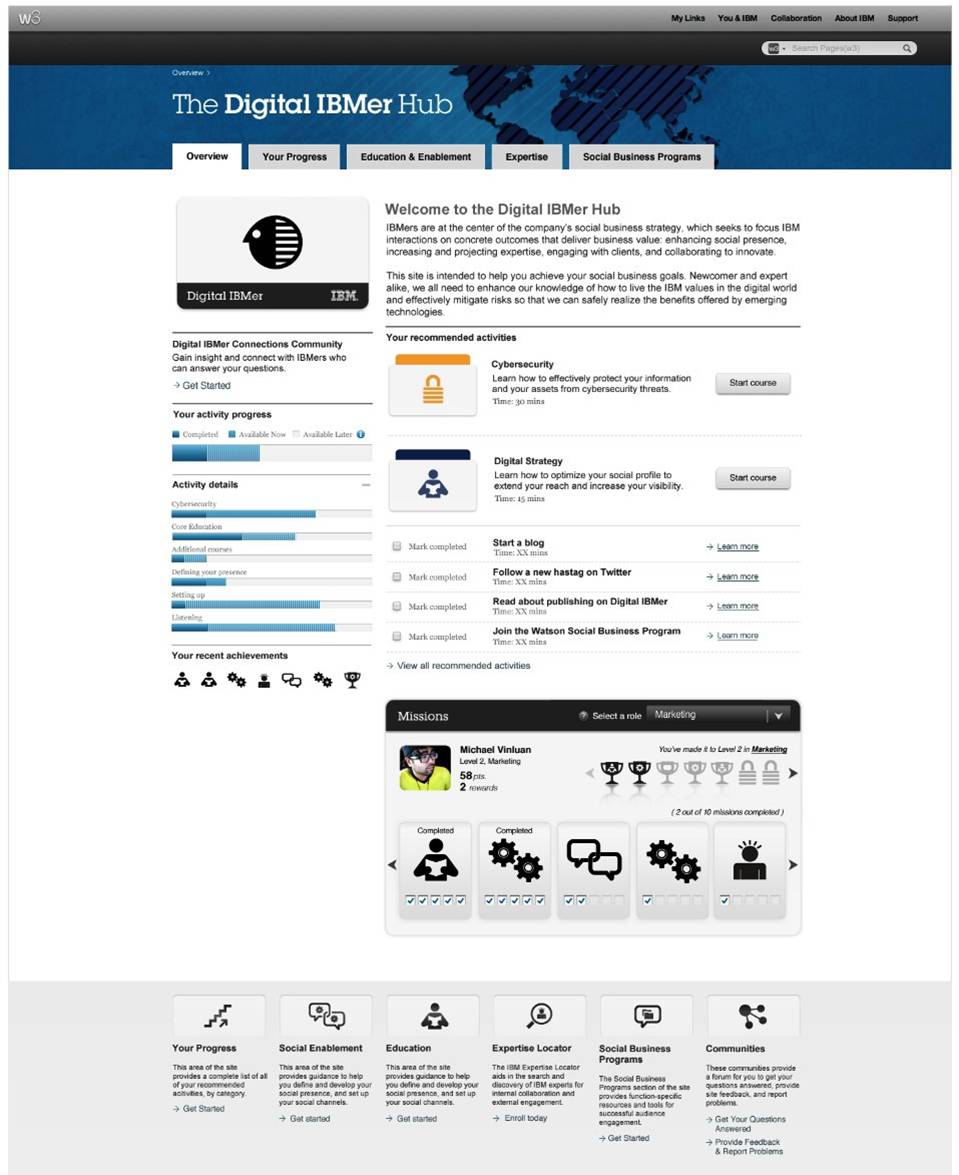
Digital IBMer Hub Overview Full Size

We’ve created over 60 courses available on the Digital IBMer Hub, IBM’s employee training portal, to educate our 430,00+ employees on Social Business best practices. Nearly 200,000 courses have been completed.

This is a tremendous opportunity for the employees, but they may not see it right away. If they don’t see the value for them personally and what they’ll get out of it any amount of time is a waste.


This post was inspired when I served on a panel today at the Social Media Today “Social Shake Up” event with Richard Margetic, Director, Global Social Media, Dell and Sandy Gibson, CEO, Elevate, our panel moderator was, Greg Shove, Founder and CEO SocialChorus. The panel was called “Throwing Open the Floodgates: Empowering Employees” – here’s a brief descriptor: The rise of social media means that employees can become engaged with their customers within their individual capacities. But of course that’s easier said than done. Well ask four important questions: What are the floodgates, what does through them open mean, what are the risks and rewards of dong so and finally, how do you best throw them open?

Our panel moderator, Greg Shove, asked us an interesting question …

“How many hours of social media training are enough for your employees before your brand considers ready to participate in social media?”

Richard, responded explaining the Dell Social Media and Communities University (SMaC U) program requires 8 hours of training before any employee can receive their certification and use the @Dell identifier an officially represent the brand.

Empowering Camp Moxie teens to establish and manage their social reputation

Stimulating young women leaders by increasing their understanding of personal internet reputation management and social media analytics.

I recently had the opportunity to partake in a rewarding opportunity. In partnership with Institute for Learning & Performance Improvement, College of Education at Wayne State University, I volunteered my time and social business expertise as part of IBM’s Corporate Citizen Initiative to present at Camp Moxie, a summer camp, sponsored by Girl Scouts of America.

It’s not just a summer camp though, it’s much more! It’s a leadership adventure for girls who want to make a difference in the world! At camp, girls explore their interests and talents, build confidence, and strengthen leadership skills. They make lasting personal friendships while cultivating valuable professional relationships. Girls develop leadership skills by participating in exciting, interactive, hands-on workshops and activities facilitated by local women leaders in business, philanthropy, and elected office.

I prepared this presentation, which was intended to stimulate their understanding & interest social entrepreneurism, personal reputation management and social media analytics.

Using myself as an example, campers learned about visual rendering of data, how it can increase knowledge, communication and help shape your personal brand. In a workshop which followed, they were provided the opportunity to analyze basic social network structures and understand their implications. As well as explore the complexity and reach of digital communications, while recognizing how to apply social media to increase awareness of issues relevant to their lives.

This community outreach opportunity allowed me to live a few of IBM’s Values and practices, including:

  • Put the client first. With an audience of 150+ teenage girls from 12-17 yrs., I weaved throughout this talk relevant points to them (from following and tweet to Justin Bieber to SnapChatting with their friends) as I spoke, while also bridging to the future which is not far off, such as preparing for graduation and potentially college.
  • Think, Prepare, Rehearse. As I prepared my presentation, I thought through my material from the vantage point of my audience (luckily I have my own children in this same age bracket, so I had plenty of first hand understanding of how they use social networks and what they expect from it). I prepared for the evening with a few key objectives in mind. I wanted the girls to be inspired and take these messages of empowerment away after the session:
  • I pulled together a story based on the notion of “your regulation proceeds you”
  • Understand that every interaction is public and can be mined and analyzed
  • You’re empowered! Use it for GOOD, anything is possible!
  • And last, but not least, There are women leaders everywhere! Will you become one? ~ Thanks for the inspiration Ginni!
  • Share Expertise. I’m so fortunate to have open leadership, which encourages sharing our passions and expertise. This opportunity not only benefited me through sharing my passion and helping to teach and demonstrate my expertise, it also helped 150+ teens think about their digital reputation and what it means in shaping their character. Many, with eyes wide open, thought about this for the very first time!

I would like to thank the Wayne State staff at the Learning & Performance Improvement, College of Education at Wayne State University who made this possible, especially: Dr. Kenneth Chelst, Monica Tracey and Ingrid Guerra-Lopez