Show me. Guide me. Let me.

An approach to building a training curriculum to improve employee engagement through social media. 

Over the course of the last year, I’ve worked with our internal communications & training specialists to lead the develop of an education curriculum to advance employee skills in the area of external social media engagement to benefit our customers and our brand. In this post and several to follow, I’ll share our approach in hopes of helping other brand marketers contemplating building such an education curriculum.

Getting Started

Before you begin creating any materials, it’s important to conduct listening research to understand which venues your customers are most engaged on. Knowing this will help you prioritize the training modules that need to be developed. For example, since IBM’s a large B2B in the tech space, we have specific focus on professional social networks, User Groups, Tech Forums & Communities and Tech related blogs so we’ve prioritized training on these venues. You’ll want to support your employees to advance skills on appropriate venues where your customers & prospects are more likely to connect & develop relationships. Stay away from developing training about the latest tools, there will be several hundred new ones introduced in the next few months and you won’t be able to keep up with them or the enhancements made post release.

Outline clear learning objectives

Once you’ve prioritized the venues important for employees to engage in, you’ll want to map out a curriculum that can accommodate various skill levels from beginner to advanced and begin segmenting the skills each module will deliver. For example:

Blogging 101: The Basics

Learning objectives:

  •     Identify the basic features of Blogging and its terminology
  •     Select a hosting platform for your blog
  •     List techniques to create compelling blog content
  •     Describe the guidelines and policies for Blogging specific to your brand

Blogging 201: Intermediate – How to Plan, Maintain and Optimize your blog

Learning objectives:

  •     Identify the need to schedule blogging on your calendar
  •     Demonstrate how to create compelling content
  •     List techniques to optimize your blog for search engines to grow your audience

Blogging 301: Advanced – Differentiating and Promoting your Blog

Learning objectives:

  •     Identify how to differentiate your blog and promote your expertise
  •     Grow your blog followers and connections
  •     List tools to help you measure your influence

Training Approach: Show me. Guide me. Let me.

We use a progression of simulations under the framework of Show me. Guide me. Let me. This approach gradually helps learners develop the skills they need to engage in social media on behalf of IBM. More specifically:

1. Show Me (Demonstration): Video simulations demonstrate the steps of procedures to learners, while also showing text that describes the process. Audio is often also provided to explain the steps to learners.

2. Guide Me (Guided Practice): Learners participate in the simulation by clicking the tools they would use in real life, but the tools are simulated. Throughout the simulation, text or audio guides learners through the process within a safe environment where learners can make mistakes without interfering with actual customer information in a live system.

3. Let Me (Assessment): Learners click through a series of steps within lab exercise to achieve desired results, but no guidance is provided during the exercise. Learners rely on their knowledge attained in steps 1 and 2 to complete the simulation. This is the most effective way to know whether learners understand the process.

Training delivery methods

It’s not always feasible to host on-site training. This was the case for us because we’re a global brand, so we use web based collaboration tools like IBM Connections and Smart Cloud to deliver the training. Hosting a series of community based lunch & learns in which the presentation was shared by the trainer during the first 30 minutes and then was opened up for questions and discussion the last 30 minutes. Throughout, participants and moderators are actively using text chat to provide input and ask questions or provide answers. We also recorded each session and made the modules available on our internal intranet portal called the Digital IBMer Hub. Employees to access the modules on demand at a time that is convenient and replay as many times as they like.

Given the quickly evolving nature of social and digital media, you will need the ability to quickly create and distribute training or education to your people—especially as new channels, best practices, or policies emerge or fade. This approach could easily be used to train employees who are active in social media and also to keep them continually equipped with the latest information about your brand.

Effective Social Business Management

Social is not just another way to push content, it gives you the ability to connect human beings with one another and ignite conversations around topics of interest relevant to your social business initiative.

At IBM, the Social Business Manager collaborates closely with the Marketing Segment Manager to provide oversight for all aspects of a social business program including social listening research, planning, engagement and measurement.

Four requirements of an effective Social Business Manager include:

  1. Information Gathering
  2. Evaluating the data
  3. Social Strategy & Content Plan
  4. Measurement

Screen Shot 2015-04-26 at 12.36.10 AM“On a day-to-day basis, I mostly use HootSuite to monitor a few different social streams and what’s being said. I can retweet the content, or send it to one of our SMEs to share. I also like Sysmos. I use it on a weekly basis to track some of our numbers.”  Kate Motzer, IBM Social Business Manager


Information gathering

Utilize social intelligence to understand the marketplace. There are a variety of ways to gather social intelligence. For the most reliable results, you’ll want to combine in-depth research with real-time listening. As a complex Social Media eco-system continues to emerge, any social media lead will rely on various tools to manage their social media programs.

Screen Shot 2015-04-26 at 12.39.41 AM“I’m using social dashboards to get information, or certain keywords or hashtags for conversations that are going around, and trying to be involved in that conversation, it also helps us identify communities and specific people who are influencers…”  Cleveland Bonner, IBM Social Business Manager

Evaluating the data

Understand your audience; what is important to them and who is important to their conversation. Building your constituency — a group of people who would identify themselves as a group based on shared interests, beliefs, or behaviors — is a critical part of the success of any social business program. The more specific you are about your constituency, the easier it will be to create a digital plan that they will value and engage in.

Screen Shot 2015-04-26 at 12.42.49 AMAre we driving conversations outside of the echo-chamber? Also, are people engaging with your blogs? Are they responding to your Tweets? Are they having conversations on Facebook or SlideShare?”  Colleen Burns, IBM Social Business Manager


Social Strategy & Content Plan

Create a Social Strategy & Content Plan informed by your evaluation. Make connections between thought leaders. Determine who should be involved in this conversation, who can help the marketplace understand your company’s position and who can help your company leaders better understand the marketplace. Decide on the content type and content format that you should share and distribute in your social strategy.

Measuring Success (Metrics):

Monitoring and improving upon Reach, Engagement, Amplification & Conversion.

Screen Shot 2015-04-26 at 12.36.10 AMI think what’s important is having a very clear and well-defined strategy and objectives, figuring out which groups you’re going to enable and how you’re going to enable them, and then making sure to provide them one spot that has all of the information they need in a manner that’s not overwhelming.    Kate Motzer, IBM Social Business Manager

An effective Social Business Manager understands and cares about the needs of their client and the community that their client serves. They learn the business culture as well as the political, economic and social context that influences their client’s industry. The Social Business Manager uses this intelligence to help the client achieve their business goals by identifying, connecting and communicating with influential decision makers. The goal is to create value for the client.

Do you have a dedicated team to drive effective social business management? Are you wondering what roles are required? Check out my book, The Most Powerful Brand on Earth, which includes a full chapter dedicated to the roles required to build a successful social team.

Are marketing departments prepared for big data?

I recently shared my thoughts on how marketing professionals are generally ill-prepared for leveraging the opportunities available for using data and analytics tools to gain deeper insights into customer behaviors and market trends. Here’s an excerpt from that discussion where I explain how B2B marketing leaders need to move beyond simply consuming data to using data in real-time and applying predictive analytics to better align the insights that are obtained with the strategic initiatives the organization is focused on. You can read further details in IBM’s Global CMO Study

Participating along with me on this panel were B2B marketing experts David Meerman Scott and Mark Wilson @Avaya. Thanks to veteran journalist Ellis Booker for moderating our discussion. View our Google Hangout discussion in full:  Top B2B Marketing Trends 2013

Building the IBM Brand in the Social Sphere

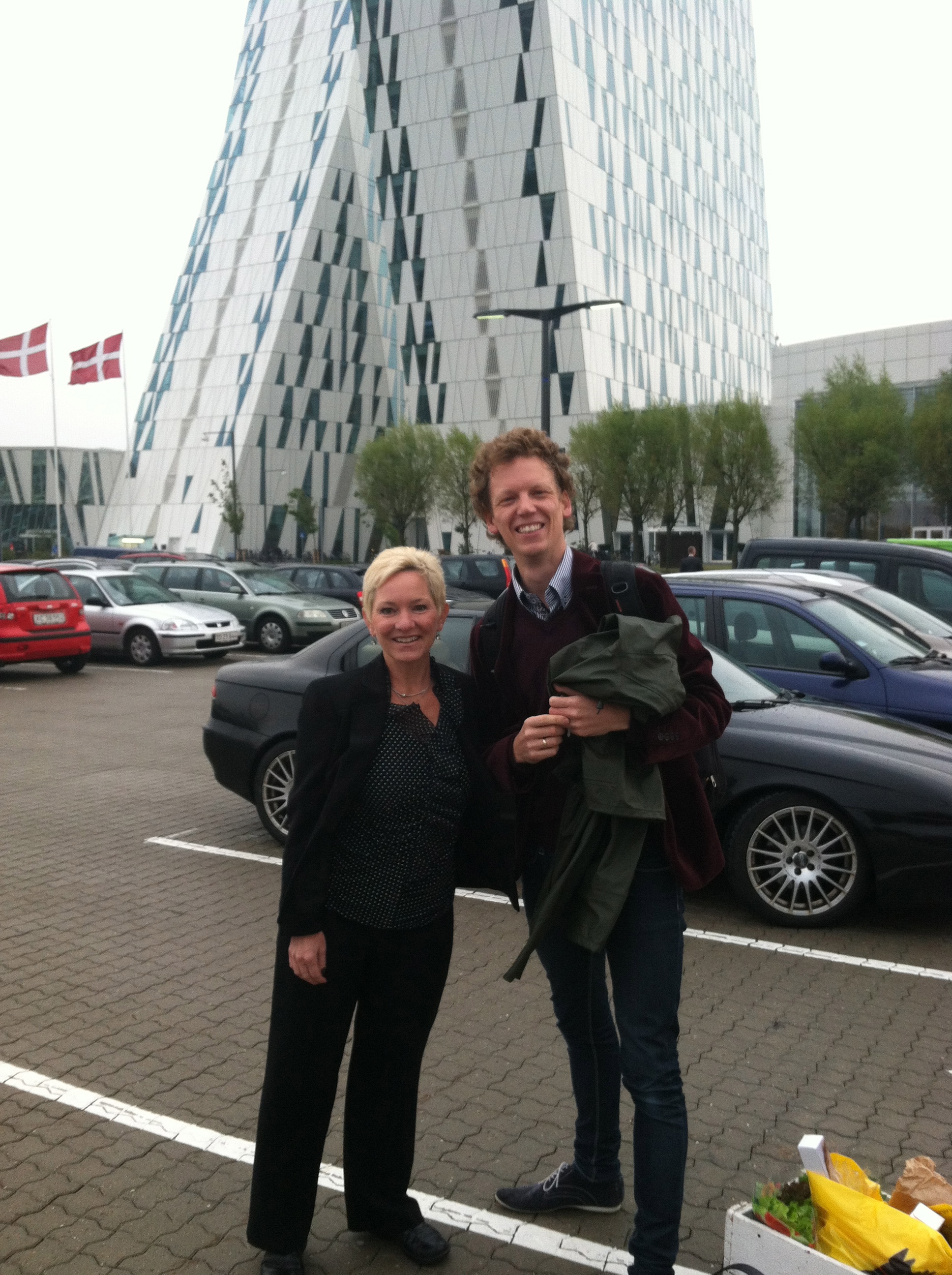
I’ve traveled to Copenhagen, Denmark to speak at the IBM Smarter Business Event.

This is my first time here and it’s an amazing vibrant city, full of old world charm and tourists from around the globe. I was lucky enough to have some time when I first arrived to tour a bit and take some snapshots to share with my family, friends and co-workers back in the US.

I’m excited to present work I’m leading, more specifically the IBM Select Social Eminence Program. This initiative empowers employees who are world-renowned for their expertise, experience, and reputation to more effectively share their knowledge across the social web. This is one of many social enterprise programs in IBM’s digital & social marketing strategy.

Also presenting is my esteemed colleague Christian Carlsson @chris_carlsson, IBM Digital Leader of Denmark. He’ll be sharing Social Business Recipes from IBM’s Social Business transformation.

While Christian and I have met virtually many times via collaborative communities and have shared ideas over the phone while web conferencing, there’s nothing like meeting in person face to face. 

I’m also looking forward to is talking with our IBM Customers who are keen to understand what IBM’s doing to become a social business. It’s a journey, one that I’m passionate about and have been involved with shaping for a number of years.

After that, I’ll lead a discussion with MBA students about the importance of building & sustaining your personal brand online. Share tips on getting started, how to make connections with those who share your interest and provide some recommendations on what not to do.

For those attending the event, I look forward to meeting you! For those following the event, I’ll share my perspectives via Twitter #sbdk #socbiz @sfemerick

Performance Guru Advocates the Human Side of Social Business

Martin Packer describes himself as an “IBMer, Mainframe Performance Guy and zChampion, who gets to think about lots of other stuff.” And if you’d follow him on Twitter, friend him on Facebook or read his blog, you’d soon realize that characterization fits him to a T.

Martin’s involvement with social media began 25 years ago, when he first joined IBM and was introduced to its VM forums. Used by the technical community to talk internally about VM operating system issues, Martin quickly discovered two things. “Firstly, I could get discussions going on technical topics and, secondly and perhaps more importantly from a social perspective, I could find like-minded people in the company,” he says.

The forums provided Martin with a vehicle to grow professionally and gain stature as a mainframe performance specialist. They also gave him the impetus to establish his own voice within his community. “In 2005, I became aware of IBM’s internal blogging site called Blog Central. I guess I was a late adopter of blogging as a technique, but I took to this one quite readily and that really was where I got started with blogging and then with micro-blogging through Twitter and a lot of other social applications,” he says.

Today, Martin’s principal social applications are: IBM developerWorks, his Mainframe Performance Topics blog that’s open to IBM and non-IBM developers alike; he’s on Twitter @martinpacker, where he has close to 1,300 followers; LinkedIn where he continues to grow his professional network with those who share common a interest in mainframe performance topics and Facebook, where approximately 50 percent of his 300-plus friends are customers, IBM developers, consultants and other people in the field.

How does Martin make use of these different applications?

“Well, it’s horses for courses,” he explains. “I got heavily into Twitter because a lot of what I had to say was very brief. I didn’t want, for example, in a blog post to develop an argument over several column inches just to deliver a one-sentence payload. So, for me, Twitter works very well. It’s not as rich a medium as Facebook, so where the richness of medium is required, I think Facebook is better.

“But I’ve returned to blogging this year because I’ve realized there are some things I want to explain and discuss in much more detail and blogging is the right medium. … I think it’s a case of you use the tool depending on what you’re trying to do.”

On mixing personal and professional

Martin is not averse to mixing in non-technical discussions and comments. In fact, he sees it as a way of bringing his community closer together. “We get to find common ground,” he says. “For example, it might be taste in music or movies or books we’ve read, or maybe personal philosophy. So I have found that it’s really helped in getting to know customers and other IBMers and consultants in the industry much better and, hopefully, the same has worked the other way around.

“Other people have been able to get to know me better, to build common cause with me better, and that’s the way it seems to work.”

This eclectic approach of just being yourself is what Martin calls ‘authentic voice’ — “talk about stuff you want to talk about in ways you want to talk about it, using the media you want to talk about it in.” And it appears to have served him well in advancing his credibility and social eminence.

For example, when he speaks at conferences or visits with customers, “I’m seeing more and more people say to me I actually read your blog article on this very subject the other day,” he says.

Advice for beginners
Martin recommends that people find the medium that works best for them — “it’s probably several media” — and determine where the community they feel most at home with resides. Once people get started, he says, they’ll figure out how much time they want to devote. “I don’t really schedule time for social networking,” Martin says. “In fact, I regard it as interstitial. It’s stuff I do on and off throughout the day and maybe the night, as and when the mood takes me.”


Techie Uses IBM developerWorks to Build Social Eminence

Nigel Griffiths eats, drinks and sleeps Power Systems. Around 15 years ago, this IBM performance guru located in the United Kingdom authored a free utility he called nmon (short for Nigel’s Monitor), which can be used to monitor and analyze performance data on AIX and Linux systems.

While never officially supported by IBM, the tool captured the attention of performance specialists throughout the world to the point where today, Griffiths estimates, it has between 20,000 – 30,000 users. As nmon’s popularity grew, Griffiths was faced with a problem: how best to support this burgeoning community. “And so to communicate with them better, rather than e‑mailing them all,” he explains, “I started to get involved in developerWorks …” Thus marked the beginning of Griffiths’ journey into using developerWorks and its extensive social media capabilities.

A growing awareness of users’ needs

Griffiths first step was to create a wiki which he used to provide documentation and downloadable binaries for nmon. From there, he started a forum to answer questions from users directly and get answers to them fast. But he soon discovered that he was also fielding questions about Power Systems performance in general, and he noticed that many users were confused about how the machines work and how to get the best out of them, “Everyone wants their machine to go faster”.

And so Griffiths began blogging on developerWorks to allow others to benefit from his AIX and Linux expertise. He even made a few embedded videos. “I have the luxury that I work in advanced technical support, so I work on new things that are happening, new machines that we are bringing out with the latest technologies,” he says. His rule of thumb in deciding what to blog about: when he comes across content of interest to him, chances are that lots of others will be interested too.

The reader reaction and comments he’s generated from his blog entries have helped Griffiths escape what he calls “expert blindness”. He points to IBM clients just starting out and how they often struggle with things that he thinks are blatantly obvious. “That makes me rethink the way that we’re putting these things over and it reminds me that … there’s always some new guys that need a bit of help,” he says.

Griffiths has also found that customer tech people value interacting with IBM tech people and are impressed when contact is made, which helps increase brand awareness and purchase consideration among IT decision makers.

Griffiths is now using Twitter @mr_nmon to get the word out about his blog postings and to follow other leading performance experts. Currently, he follows 12 other techies inside and outside IBM whose knowledge he respects. “I usually find maybe one or two things a day that I think, oh, that’s useful, that would take me ages to work out. Or, I’ll file that one away, that could be useful in a project in the future,” he says. He also likes to re-tweet those items to the 400 or so people that are on his Twitter list, so they’re aware of the good stuff that others are doing.

Finding your own way

Griffiths’ advice to others considering social media: “Find out what approach to social media works for you.” For him, it’s about spending a few hours each week sharing expertise so people don’t have to find things out the hard way.

While leery about becoming too well known, Griffiths acknowledges that his reputation as a performance guru has grown considerably since he started blogging and tweeting. And his moderated use of social media shows that you don’t have to jump in with both feet to be really effective and make a contribution.

A quick look at developerWorks

Since 1999, IBM developerWorks has been the IT industry’s most comprehensive source of technical content for the developer community, focusing on IBM software products, as well as open-standards technologies such as Java, Linux, XML, Web development, and more. Four million IBM and non-IBM developers, IT professionals, and students in 195 countries use developerWorks each month to learn about advances in IT and open standards, develop and showcase their experience and skills, solve problems, and work collaboratively with experts and peers.

Today, the platform provides an extensive and well-managed set of social capabilities specially designed for business, which include wikis, blogs, forums, bookmarks, groups and profiles. Recently, developerWorks received the Forrester Groundswell Award and the AMI SMB Social Media Award in recognition of its effective use of social media.


Master Inventor Extols “the Unedited Voice of the Individual”

This past May, Tony Pearson had a problem. He was visiting with a group of customers in Australia —  nearly 8,000 miles away from his home base at the IBM System Storage Executive Briefing Center in Arizona — and needed to know if the IBM XIV Storage System would work in a particular competitive environment.  And so the master inventor and senior managing consultant posted his question on Twitter and waited.

Within 30 minutes, he received return tweets from the two non-IBM hardware manufacturers involved letting him know that they both support the proposed configuration.

“I got my answer without even knowing who to call or who works in those companies,” says Tony. “I just put it out there saying: I have this question. Does anybody have an answer?”

Tony’s story is just one more example of how he’s been able to use social media to benefit IBM and build his personal brand as a system storage expert and go-to guy.

How it all began

Back in 2006, Tony was asked to create a set of podcasts to explain and promote IBM’s renaming of its disk and tape products under the IBM System Storage product line. Thinking his voice was unsuitable for a podcast, he decided instead to blog about the changes. A year later, when he was transferred to IBM’s Executive Briefing Center, he continued to publish his blog, changing its content and readership to support his new organization and job responsibilities.

Tony’s philosophy on blogging stems from a book he read early on titled Naked Conversations by Robert Scoble and Shel Israel. “They had a very crisp definition of a blog. It’s the unedited voice of the individual,” he says.

So what does he talk about? “I talk about new announcements. I talk about how to use the products. I don’t talk about conversations I have with clients, but I might say: ‘These questions come up fairly frequently at briefings … so I thought I’d clarify this position or how IBM feels about this.’”

And every now and then, he’ll write about something personal — a vacation he’s taken or his volunteer efforts.

Tony believes his blog also helps open up IBM to the outside world. “IBM in the past has been seen as this impenetrable fortress,” he explains. “And I tell everybody … if you have a question about storage and you don’t know who to ask contact me and I’ll find the right person.”

His passion and commitment to his “Inside System Storage” blog have helped make it one of the most active blogs on IBM developerWorks. “People know who I am and they can trust what I say versus someone else who they’ve never seen or heard from before,” he adds.

Tips for success

Tony likes the progressive, open approach IBM has taken regarding the use of social media by employees. “One of the things that IBM did well is develop a very robust, simple-to-follow set of social computing guidelines,” he says. He cites “don’t pick fights” and “identify who you are” as two of the guidelines that can help people starting out avoid common mistakes.

And he encourages all of his colleagues to find their voice in the blogosphere, express their opinions on Twitter, share their presentations on SlideShare.net or post photos, graphs and diagrams on Flickr.com. His recipe for social media success rests on four essential ingredients:

  1. Stick to your expertise. “I saw a great quote that I used in one of my blog posts that said that the food in museums was as bad as the murals in restaurants. It was a good reminder that you should focus on what you know.”
  2. Do your homework. “People should read before they write. You’re more credible when you can say ‘I’ve read everyone else’s writing first, and here’s my opinion’ as opposed to adding little or no value to the conversation.”
  3. Devote the time. “There’s a lot of work to create a blog post … gather the research and do all the stuff so you make a complete quality post. It’s not going to happen with10 minutes a day.”
  4. Keep active. “One person told me a great thing: blogging is like jogging. If you don’t jog daily or weekly, and only jog every now and then, it’s not going to be of any value.”

He also warns people to avoid perfectionism when blogging. “I think people are worried … that they’re going to say something that makes them look like they’re not the experts that they claim to be,” says Tony. “Just like in real life, you can edit the blog and say ‘I made a mistake. This is what I meant to say.’”

A chat with Willie Favero DB2 for z/OS evangelist about is secrets for social media success

With close to 6,000 RSS subscriptions and 14,000 to 15,000 hits a month, Willie Favero runs one of the top DB2 for z/OS blogs on the Internet. So when Willie talks … people listen.

But it wasn’t always that way for the senior certified IT software specialist. Spurred on by a friend in Toronto who had started a blog on DB2 for LUW (Linux, Unix, Windows), Willie began his blog in 2005, “… when most people I dealt with didn’t know what a blog was,” he says.

His approach, which Willie maintains to this day, was simple: frequency, brevity and informality.

  • Frequency. “If you write a blog post once every two months, no one is ever going to read it because no one is going to take the time to check periodically. But if you always have information up in front of your readers that is of interest to them, they will continue to read.”
  • Brevity. “The idea of being able to read something that isn’t as lengthy as an article is really quite nice for a lot of people. They sit down, they get their cup of coffee in the morning, they check what new blog entries are out there.”
  • Informality. “You can’t write it formally like you would a white paper or an article. You write the blog as if you were talking to the person across the table from you because that’s what they’re expecting.”

He also advocates an occasional non-technical post — “Be careful not to overdo it,” he warns. So, for example, when he bought his new motorcycle or became a grandfather for the fourth time, he blogged about that. And his readers love it.

Soon after he started his blog, Willie built a LinkedIn profile, jumped on Twitter and started using other social media platforms, such as SlideShare, through which he could further promote and explain the inner workings of DB2 for z/OS. He even developed a small Web site which ties everything together.

Making a difference

Today, Willie is constantly bumping into IT professionals, both customers and colleagues, at conferences and seminars who faithfully read his blog and tweets. He recalls sitting in sessions when the presenter “will quote something and he’ll say, ‘I picked up this item in my presentation from Willie’s blog.’”

“Now that’s really nice,” he adds, “because not only do I get the satisfaction of knowing someone’s getting some use out my blog, but I just got a free piece of advertising in front of 50 to 60 people in the room.”

The DB2 for z/OS evangelist’s blogging also caught the eye of his manager. “My manager looked at my interest in social media and said, ‘You like doing this and we benefit from you doing this, so let’s make it a bullet on your performance plan.’ Now I’m supposed to write at least one blog entry every week.”

Willie really likes having his manager’s buy-in because it takes the pressure off his blogging activity and he’s recognized for it. He believes everyone active in social media should get that same support.

Here’s how to connect with Willie:


SocialMedia in the Underground World of B2B

I just returned from SXSW Interactive, it was my first experience attending this event and I was thrilled be a part of it. If you’ve heard from others that it has to be experienced to be understood, it’s true – I’ve never seen anything like it. There was an incredible vibe from the massive amount of high energy innovators who are all on a quest to lead the future of digital & social innovation. Representation ran the gamete from small start-ups to well established global brands leading the way and shaping this exciting period of our history.

I had the privilege to represent IBM Social Business leadership by participating in a panel: SocialMedia in the Underground World of B2B  #SMB2B  in which we discussed many of the pressing issues of implementing social media programs and leveraging social media as a competitive advantage from a leading B2B brand perspective.

Melissa Chanslor from Text 100 Moderated the panel. Participating along with me were marketing leaders Duane Schulz – Xerox, Jeanette Gibson – Cisco and Shanee Ben-Zur – NVIDIA.

Left to right: Melissa Chanslor, Shanee Ben-Zur, Jeanette Gibson, Duane Schultz and Susan Emerick – Photo courtesy of Text 100

Here’s a summary of key points I shared based on our IBM Social Business leadership initiatives:

– Conduct social listening research to better understand how and where your constituencies are participating in social and apply insights gathered from the research to your marketing planning process and tactical execution roadmap.

– Deploy subject matter experts (SMEs) to build relationships with key influencers and those that follow them based on your understanding of the social ecosystem. This approach will position limited, high value resources strategically to drive business outcomes.

– Support SMEs to build their personal as well as your brand’s reputation by implementing employee enablement programs that support high value thought leaders to engage in the right place, at the right time in a secure way. Set clear priorities for engagement.

– Help SMEs understand the many benefits of committing to sustaining engagement by sharing examples of other leaders like them who’ve successfully established a position of authority as a trusted topical thought leader.

You can listen to the panel on the podcast on demand to hear the honest dialogue and many great recommendations shared amongst the team. Thanks to Constantin Basturea you can also read a summary of the Twitter steam on Storify


“Server Chick” Uses Social Media to Set the Record Straight

Being referred to as a “server chick” on a blog post may not flatter most women, but to my IBM colleague Elisabeth Stahl, it was a sign that she had come into her own in the world of social media. It also affirmed that she was having a growing and positive impact on how people viewed IBM’s products and capabilities.

As a chief technical strategist and executive IT specialist at IBM, Stahl, focuses on systems performance and benchmarking across IBM platforms for the Systems and Technology Group.

“I make sure we highlight how great our servers and storage perform,” Stahl says, “so we can let our clients know that our products are really the ones they should be looking at, and the ones they should buy.”

From paper to blogs and tweets

In the so-called early days, Stahl would write “one-way” technical papers as her primary means of communication to clients. But as the competition increased and the use of social media in business blossomed, she realized she needed another outlet to tell the IBM story.

“I was starting to get very tired of our competitors saying things about IBM in their press releases and their blogs that just weren’t true,” she recalls. So she looked into creating her own blog as a fast and more immediate way of setting the record straight. But there was some initial hesitancy on her part.

First, despite having published some technical papers, Stahl didn’t like to write — one of the main reasons she chose math as her college major. Second, she wasn’t quite sure how much time blogging would take away from accomplishing her day-to-day responsibilities. Stahl’s first blog entry was read by two people, primarily because she asked them to. Now, her entries are read by hundreds as her contacts and social eminence continue to grow. “It’s amazing the contacts you can make with social media,” she says. “I’ve developed new relationships worldwide with clients, with business partners and with IT analysts.” Some, she adds, have responded to her posts from as far away as Nigeria and remote parts of China.

In addition to a growing blog audience, Stahl is building a Twitter following as well. She tweets whenever she comes across a paper or an article of interest she thinks would really interest her followers. “And not what I’ve had for breakfast,” she jokingly adds.

Building a reputation as an SME

Not only is Stahl convinced that her efforts are contributing to IBM’s bottom line, but, equally important, her own reputation as a subject matter expert, both internally and externally, has spread considerably — a personal and professional bonus, she says, that would never have happened so fast and so far.

What advice does Stahl have for other Subject Matter Experts who are considering social media as a way to share their expertise?

  • “Just do it!” But make sure to take advantage of the resources available. It’s also important in the beginning to ask others for advice, which Stahl says gave her more confidence and really helped her take off.
  • “Realize it takes time to do this.” Stahl remembers the pressure she put on herself in the beginning to do a certain number of blog entries, for instance a couple of times a week — which she thinks is still a good idea when first establishing a presence. But now, she only blogs when there’s really something good to write about and she feels passionate about the subject.
  • “You need to be factual, honest and engaging.” Stahl asks herself three questions before posting an article she’s written: “What would my clients say when reading this? What would my manager say when reading this? What would my mother say when reading this?”

“In the end,” says the server chick, “I found that I really loved the writing, I loved working with social media, I loved telling a story and especially interacting externally with clients in that way.”